Python
Python is where I first taught myself to code in school. It's still my quickest path from idea to a shipped product, whether that's an ML experiment, a production API, or a small automation script.

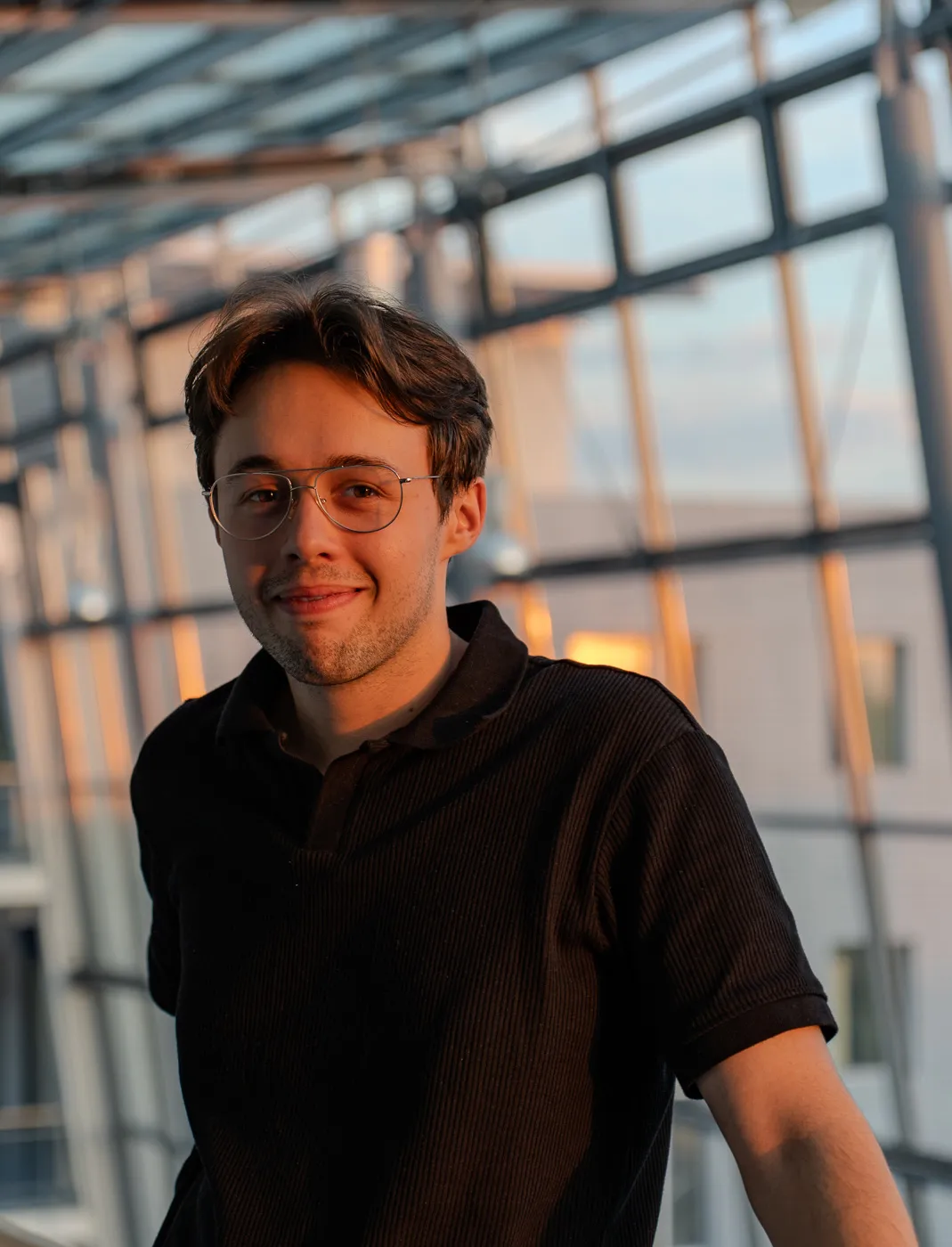
Well yes... this is me. Who else did you expect?
I'm Justin Lanfermann, a 21-year-old Computer Science student currently studying at the Technical University of Munich.
My early and sustained fascination with computing led me to explore beyond standard software, delving into system internals and early programming. Through persistent self-directed learning, I developed foundational skills in software development and system administration, evolving from initial explorations to managing complex projects.
As I continued to push the boundaries of my skills, my projects grew in complexity, evolving from simple applications to full-fledged endeavors. Even today, I remain committed to learning and exploring new technologies, always striving to improve and expand my expertise.
Beyond my passion for technology, I have a creative side that I enjoy nurturing. Although I was musically illiterate for years, I eventually taught myself to play the piano and have since become proficient in various pieces. I also find solace in 3D design, particularly in Blender, my software of choice. I've created numerous designs, ranging from hard surface modeling to sculpting and character creation, a process that I find both engaging and rewarding.
I possess a strong aptitude for teaching and knowledge sharing. Throughout my academic journey, I have actively tutored peers, formalizing this experience through a Bavarian state initiative where I supported a mathematics class for six months, contributing to their academic success. I also provided private tutoring in mathematics, English, and IT.
At university, my inclination toward teaching has only intensified. What started as a humble initiative to help a few classmates has grown into a thriving community with over 100 members who rely on us for guidance, support, and answers to their questions. This support group, which grew faster than I could have ever anticipated, has become an essential resource for its members, providing a space for them to ask general questions, seek advice, and connect with like-minded individuals. I also host unofficial tutoring and exam prep courses, which have become an integral part of our community. I had the honor of working as an official tutor for the "Introduction to Programming" course at TUM, a role that allowed me to share my knowledge and inspire others, and I now tutor the "Operating Systems and System Software" course to help students navigate concurrency, scheduling, and Linux tooling in practice.
Alongside my studies, I actively balance employment and entrepreneurship. I have worked with companies ranging from early-stage startups to established firms, gaining hands-on experience in product delivery and collaboration. These engagements fuel my own entrepreneurial projects, where I experiment with new business ideas, build prototypes, and explore how technology can create sustainable value.
Python is where I first taught myself to code in school. It's still my quickest path from idea to a shipped product, whether that's an ML experiment, a production API, or a small automation script.
Java started as a school assignment and never left my toolbox. I taught it to first-years at TUM, ship backend services with modern JVM tooling, and use it in my work environment.
At Westend61 I look after Groovy/Grails services that power internal APIs, services and automation. The JVM roots keep everything familiar while Groovy's scripting side lets me land integration fixes and admin tools fast.
I have been hands-on with large language models since the first GPT-3 release. These days I design prompting strategies, RAG and MoE pipelines, and agent-style workflows that move past demos and deliver dependable value for teams.
Docker used to feel intimidating, and now nearly everything I ship, from personal projects to university work and production services, runs in containers. It keeps environments predictable and turns deployments into a no-drama moment.
Shipping open source is nice, but real adoption needs a great interface. I grew from hand-written HTML and CSS to full TypeScript stacks, shipping sites like this portfolio and SaaS dashboards with resilient realtime backends and graceful fallbacks.
I'm comfortable modelling data across Postgres, DynamoDB, Redis, and friends. Picking the right store and keeping it healthy is core to how I build reliable systems.
As Westend61's system admin I take care of everything an office might need. That mix lets me debug anything from flaky Wi-Fi to firewall oddities without drama.
I leaned hard into cloud in 2024, mostly AWS. From containerised services to event-driven jobs, I automate the infrastructure so shipping features stays fast and safe.
Machine learning hooked me as soon as I started coding. I've built custom models, shipped applied projects at work, and now steer my bachelor's and then master's degree toward ML to go deeper.
I picked up Swift to build NeatPass, a native iOS app for creating and managing Apple Wallet passes. TUM's iPraktikum deepened my iOS skills through a team project with industry partners. SwiftUI, SwiftData, and MapKit are now part of my daily toolkit.
C keeps me honest about what the machine is doing. I use it for reverse-engineering tools and performance-sensitive utilities, and TUM coursework keeps the memory model second nature.
I run weekly tutoring sessions, exam prep courses, and a peer community that helps classmates ramp up quickly. Speaking to rooms of 30 plus students keeps my teaching sharp.
Years of moving between software development, system administration, and teaching taught me to see technology as more than code. It’s an ecosystem. Managing servers, building APIs, and mentoring students all revealed how decisions ripple through a system. I’ve learned to think in connections, not components, designing solutions that stay coherent as they grow.
I genuinely enjoy crafting story-driven presentations. Weekly tutoring sessions and impromptu talks keep my pacing, visuals, and storytelling sharp. I'm also no stranger to presenting in front of large audiences.
Four years of LLM exploration since GPT-3, multiple weekend side projects, and a runner up finish at the TUM.ai Hackathon taught me to validate ideas through scrappy prototypes.
I treat ideas like lean experiments: talk to users, validate quickly, understand the operations, and iterate until a metric actually moves. SaaS work, my stealth startup and BWL courses sharpen that mindset.