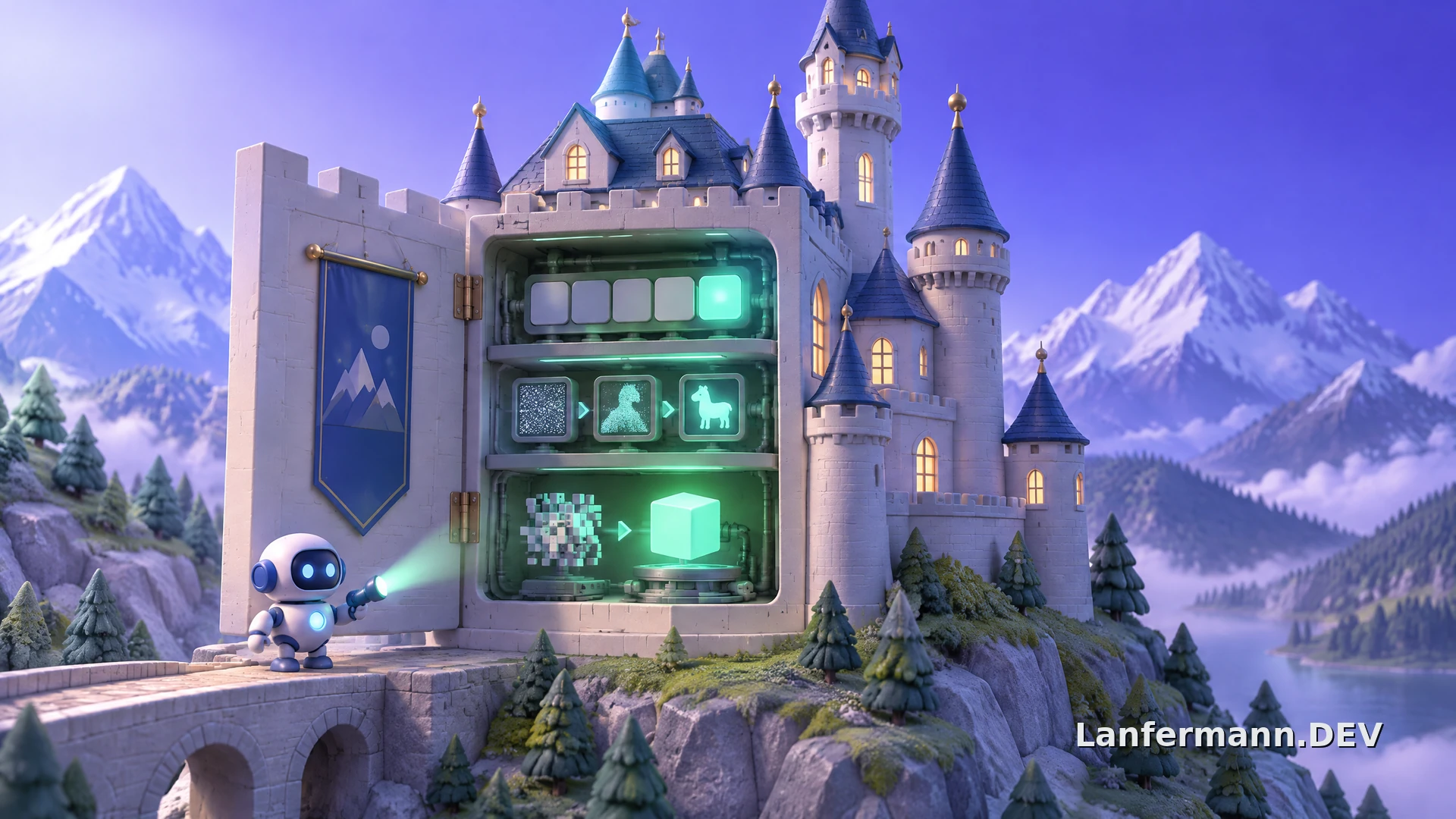
On Monday, August 31, 2026, one of the first slides I showed at Schloss Elmau had no AI on it at all. It was a German sentence with a gap, Ich gehe in die ___, and a room of eight- to eleven-year-olds called out the word they thought came next. For a few minutes, they were the language model. Later that morning, a group of twelve and older got the same sentence. That was the rhythm for the whole week: two groups every morning, in German and in English.
I was there as a volunteer with TUM.ai, teaching the hotel's Kreativ mit KI program together with a fellow member. The setting did a lot of the storytelling on its own: a retreat in the Bavarian Alps, known for its concert hall and its cultural program, and a room of children who had brought their own laptops and iPads on holiday.
The idea I built the week around was simple. Every impressive result should be followed by how it was actually made. Text first, then images, then games. The plan I arrived with was only a starting point, though. By the middle of the week, the kids had pushed me to rewrite it.
A Classroom Inside a Cultural Hideaway
Schloss Elmau does not look like a place where you explain next-word prediction to eight-year-olds. The philosopher and theologian Johannes Müller built it between 1914 and 1916 as a free space for personal and communal life, where guests were meant to take a "vacation from the ego" through classical concerts, dance evenings, and the mountains around them. After a fire in 2005, his grandson Dietmar Müller-Elmau rebuilt it and reopened it in 2007 as a hotel that calls itself a cultural hideaway. Today its program includes concerts, literature, political debates, and academic symposia, and in 2015 and 2022 it hosted the G7 summits. The house history is worth reading on its own.
The kids' program, called AI Creativity Labs on the English site, is part of that cultural offer. The official description promises creative small-group projects for children from eight years old, taught in German and English by TUM students and members of TUM.ai. Each day starts with a short impulse, continues with a project in small teams, and ends with a look back that includes the limits of AI. Elmau's own interview with a TUM.ai member has a German title that puts the philosophy into three words: Prompten statt Pauken, prompting instead of cramming.
My part was one week of it, from August 31 to September 4, as an unpaid volunteer. Each morning had two ninety-minute sessions, one for ages eight to eleven and one for twelve and older, with a short break in between to reset the room. I had been at Elmau before, for the Sunday of the TUM.ai retreat. A day of talks is a different thing from a week of teaching.
Two Age Groups, Two Languages
Elmau's guests come from many countries, and so did the families of the children in our room. The program is advertised in German and English, and it has to be. A sentence that only half the room understands is not an explanation.
Teaching bilingually sounds like double the work. Done naively, it is: you give every explanation twice, and half the room waits twice. The approach in our facilitation notes was to say the key sentence in both languages, show the idea once, and then check understanding with a question. The goal was never a perfect translation. It was one shared picture that everyone could point at.
Age mattered as much as language. For the eight- to eleven-year-olds, every explanation stayed attached to something concrete: a drawing, an animal, a creature they had invented themselves. The older group got the same ideas with more room for critique. Where did the training data come from? How would you check this answer? Which part of the result was generated, which part did you edit, and which part did you verify?
There was a third variable that no slide deck controls: attendance. The participants were the children of hotel guests, so the group changed with the guests. You rarely know in advance who will walk in, how old they will be, or whether they have ever typed a prompt before. By the middle of the week, that was the variable the plan had to bend around.
Opening the Machine, One Layer at a Time
The week followed a progression: first text, then images, then games. At every step the goal was the same. The kids should learn to use the tool, but they should also leave with a working model of what the tool is doing when it answers.
Day one started the way this post did: with the children playing the model. After the first round of Ich gehe in die ___, roughly "I am going to the ___", the context changed. First a sentence about school came before the gap, then one about being hungry for cake, and the same gap suddenly wanted different words. The exercise is built so that nobody has to be told that context shifts probabilities. The room has just done it.
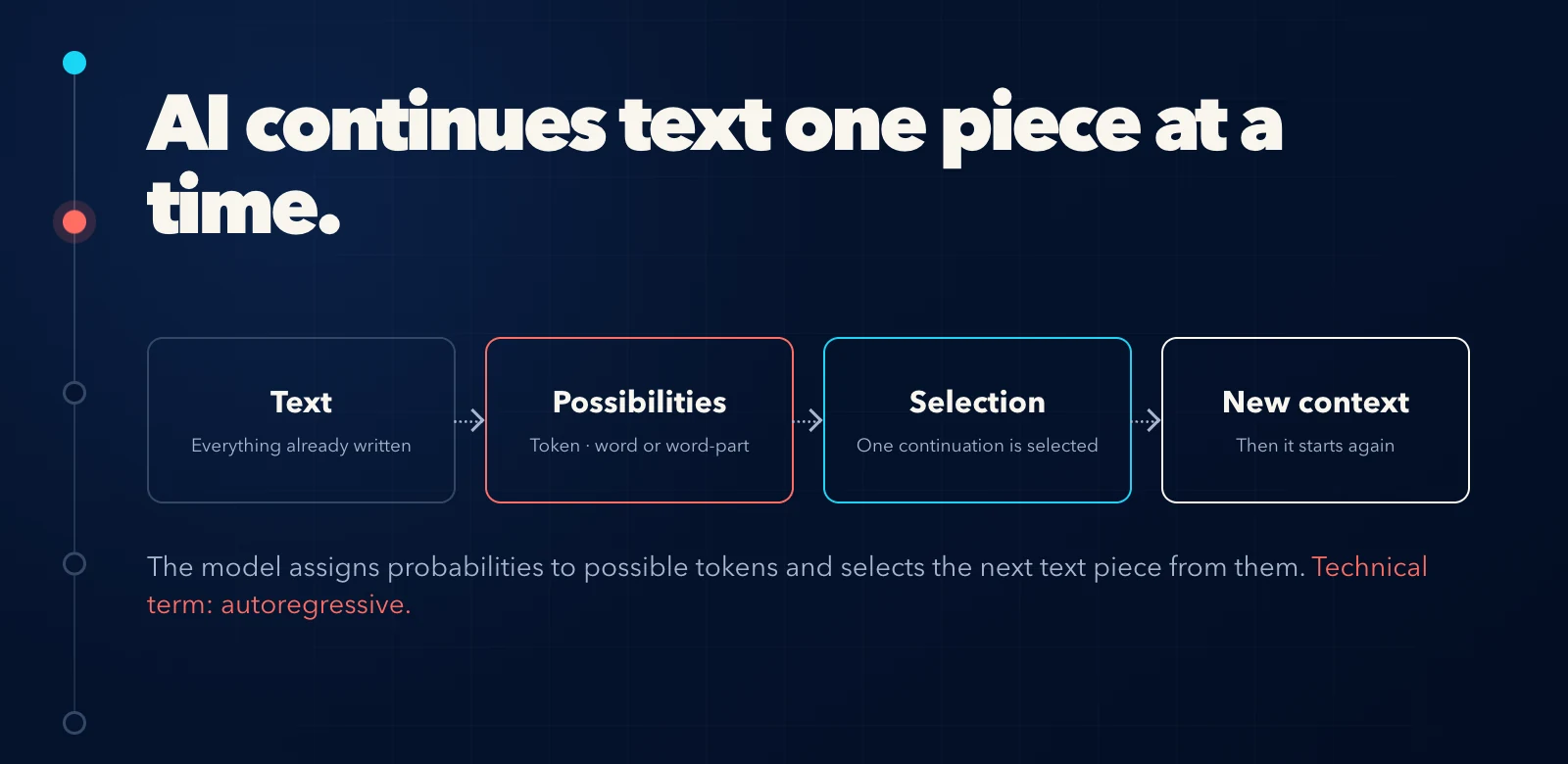
Only then did the slide show what a language model does: look at the text so far, assign probabilities to possible next pieces, pick one, and start again with the longer text. The technical term, autoregressive, appeared exactly once. A second experiment showed the part that surprises people of every age. Everyone entered exactly the same prompt, asking the AI to invent a dragon and describe it in one sentence, and the answers came back as completely different dragons. Picking the next piece involves chance, so the same prompt can end differently. Along the way, Google's Quick, Draw! let the children draw while a model guessed what they were drawing, and the day ended with a creature profile they wrote together with the AI.
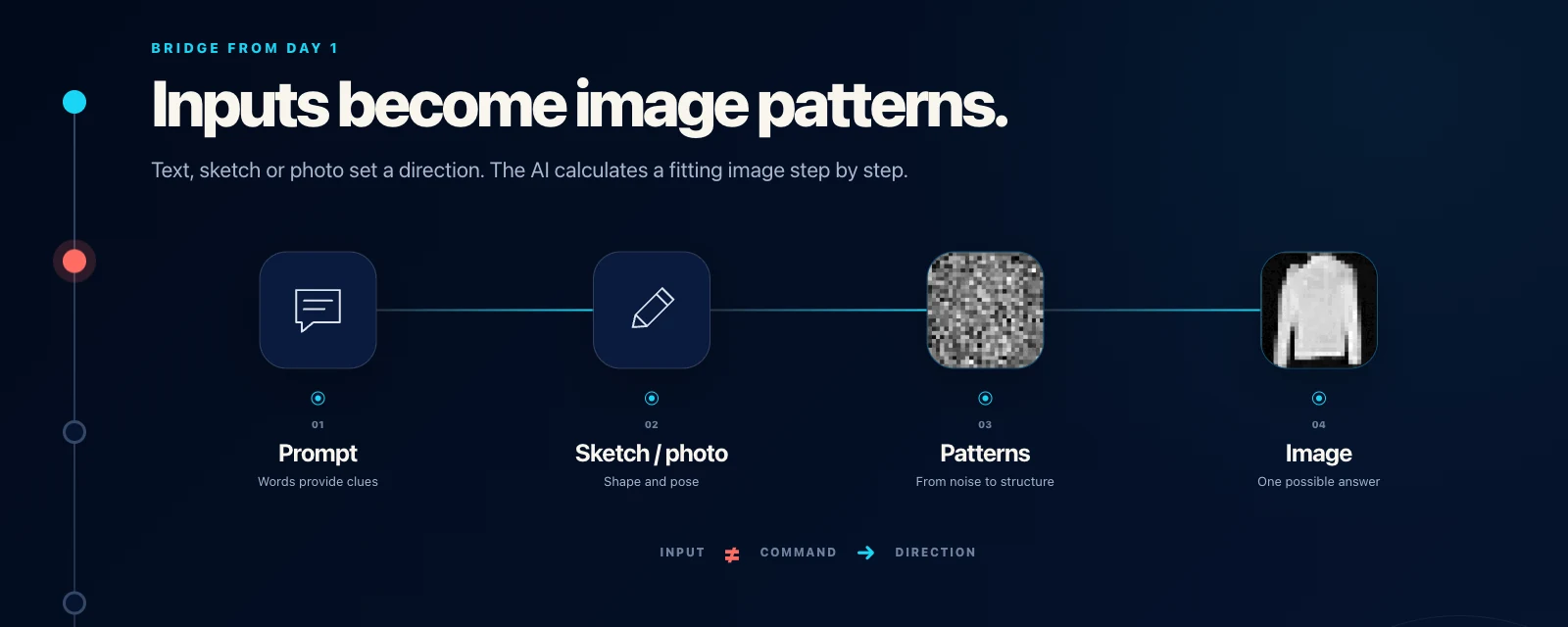
Day two moved to images and followed the same pattern. A pipeline slide connected it to Monday: a prompt, a sketch, or a photo only sets a direction, and the model computes an image step by step out of noise. The animation on that slide shows a real, simplified denoising run, a grey sweater slowly emerging from static. It is the least impressive image of the week and probably the most useful one, because it shows that the picture is calculated, not looked up.
The activities of the day were built on that idea:
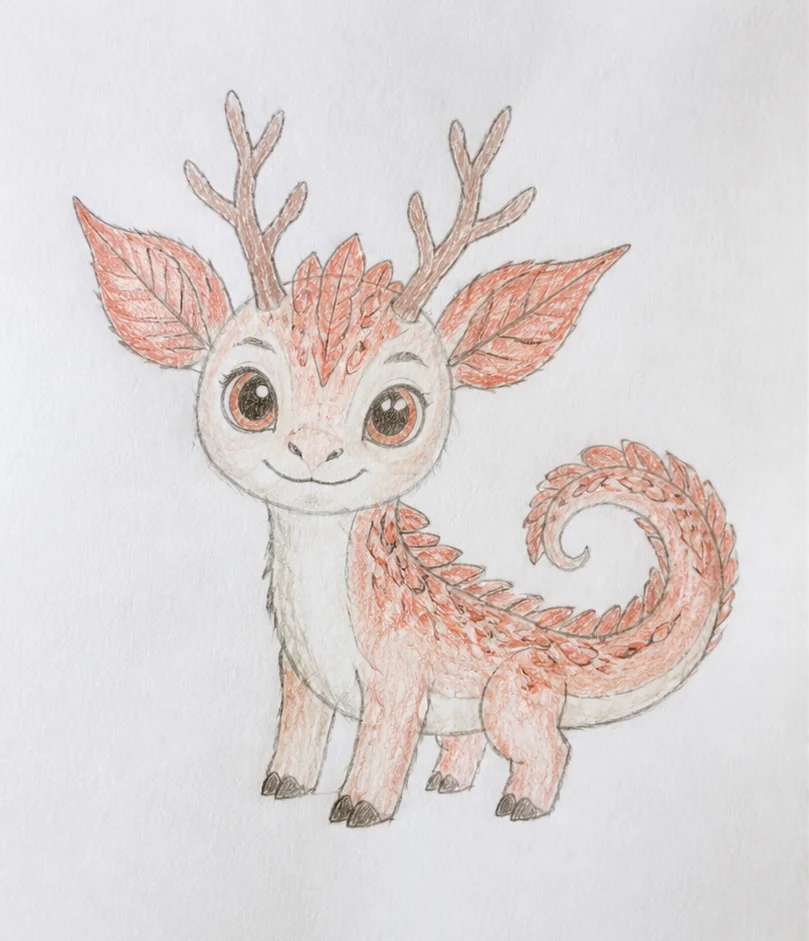
- Sketch to image. The younger group drew a creature on paper and used AI to turn the sketch into a finished picture, then compared what the model had kept and what it had invented.

- Real or AI? Real photos and generated images, one at a time, with the class voting before each reveal. The debrief slide had one sentence I would put on every AI literacy poster: one clue is not proof.
- What does the AI fill in by itself? The older group all used the same deliberately open prompt, a person doing a job they think is cool, and then counted together what the model had added on its own: perceived gender, skin tone, and age, with "unclear" always allowed. One image proves nothing. A room full of them makes a pattern visible.

Each day ended with the limits said out loud. A model that predicts likely words can produce a likely sentence that is false. A model that generates likely images reproduces whatever was likely in its training data. And a convincing photo proves nothing about whether the scene ever existed.
That is the part I cared about most. The tools the children used that week will look different in a year. The idea that an answer is a calculated continuation, with chance and data built into it, will not.
When the Room Rewrote the Plan
The original plan for Wednesday was a module called AI at School: using AI to prepare a presentation, comparing a before and an after, and talking about where AI helps learning without replacing thinking. It was a reasonable plan. It was also not what the room wanted. After two days of text and images, the kids wanted to build something of their own. And I wanted a format where they would have to test and iterate, not only generate.
So on Tuesday afternoon I re-planned the rest of the week as an AI game jam: the kids would build games of their own instead of starting a new topic every morning.
Then the room changed again. After Day 3, the group was no longer the same: new children had joined, and the skill level had shifted. A plan built around reopening yesterday's game assumes that everyone has a yesterday. So I adjusted the last two days to the new skill level of the group that was actually in the room.
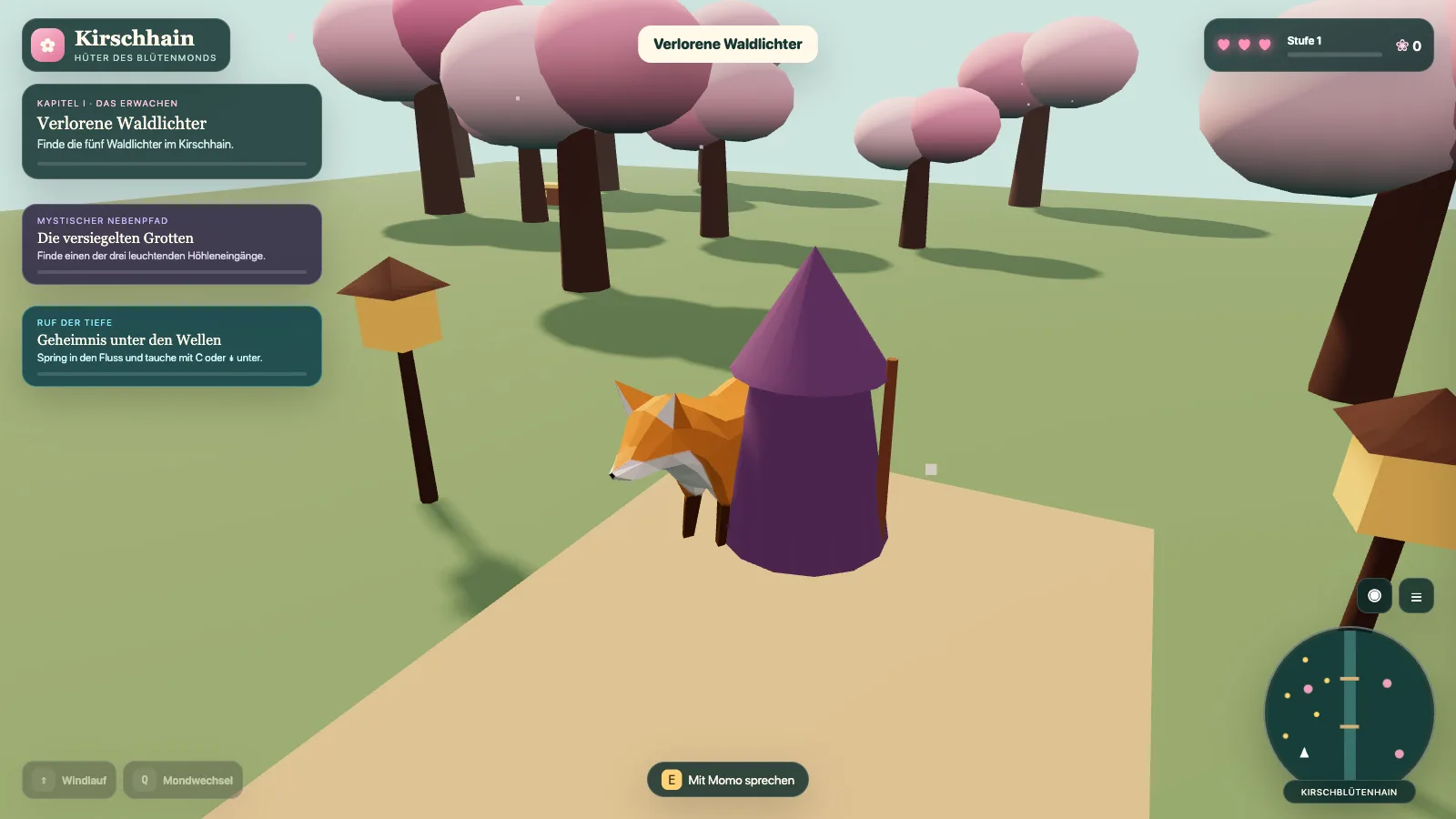
Some of the games went further than the plan did. They started as simple 2D browser games and moved into 3D during the jam. That is a big jump for a few mornings of work, and it is where build, test, and repair stops being a classroom ritual and becomes the only way to keep a project running. Even there, the point was not only how to get a 3D game, but how it works.
Teaching as a Guest
Most afternoons belonged to the valley. Elmau sits in the Wetterstein mountains, and the trails around it were a welcome counterweight to a morning of projectors and laptops. It was a very different week from my usual ones in Munich.
As volunteer teachers we were hosted as guests of the house, with half board and the spa included. The contrast is hard to miss. In the morning you explain probability with a gap in a sentence. In the evening you are a guest in a hotel that has hosted heads of state.
What does cultural education mean in a place like this? Elmau began as a place to step back from everyday life, with concerts and dance evenings; today its program also includes literature, debates, and symposia. Explaining to children who will grow up with AI how the machines behind today's text and images work fits that tradition better than it first seems. A concert hall teaches you to listen closely. A good AI lesson should teach you to look closely at where an answer came from.
What I Took Home
A week is short, and I want to be careful with conclusions. I did not measure what the children remember a month later, the groups changed during the week, and ninety minutes is not a lot of time to build a mental model of anything. What I can say is what the week changed in how I think about teaching AI:
- Explain the mechanism, not just the tool. Interfaces change every few months. The idea that a model predicts likely continuations, or computes an image out of noise, will outlast every app the children used that week.
- Children want to make things. The course correction came from the room, not from my plan. When the kids wanted to build, the right move was to let the rest of the week follow.
- Testing is the skill that transfers. Prompting is the visible part of working with AI. Checking whether the result actually works, and repairing one thing at a time, is the part that matters outside a classroom too.
- A plan is a baseline. Two age groups, two languages, and a group that changes mid-week do not fit a fixed agenda. Modular material mattered more than a perfect sequence.
The program continues this autumn with other TUM students and TUM.ai members, and the course page lists the current dates. The most useful thing I brought back from Elmau is a question worth asking of any AI explanation, including my own: after the impressive part, did anyone show how it was made?