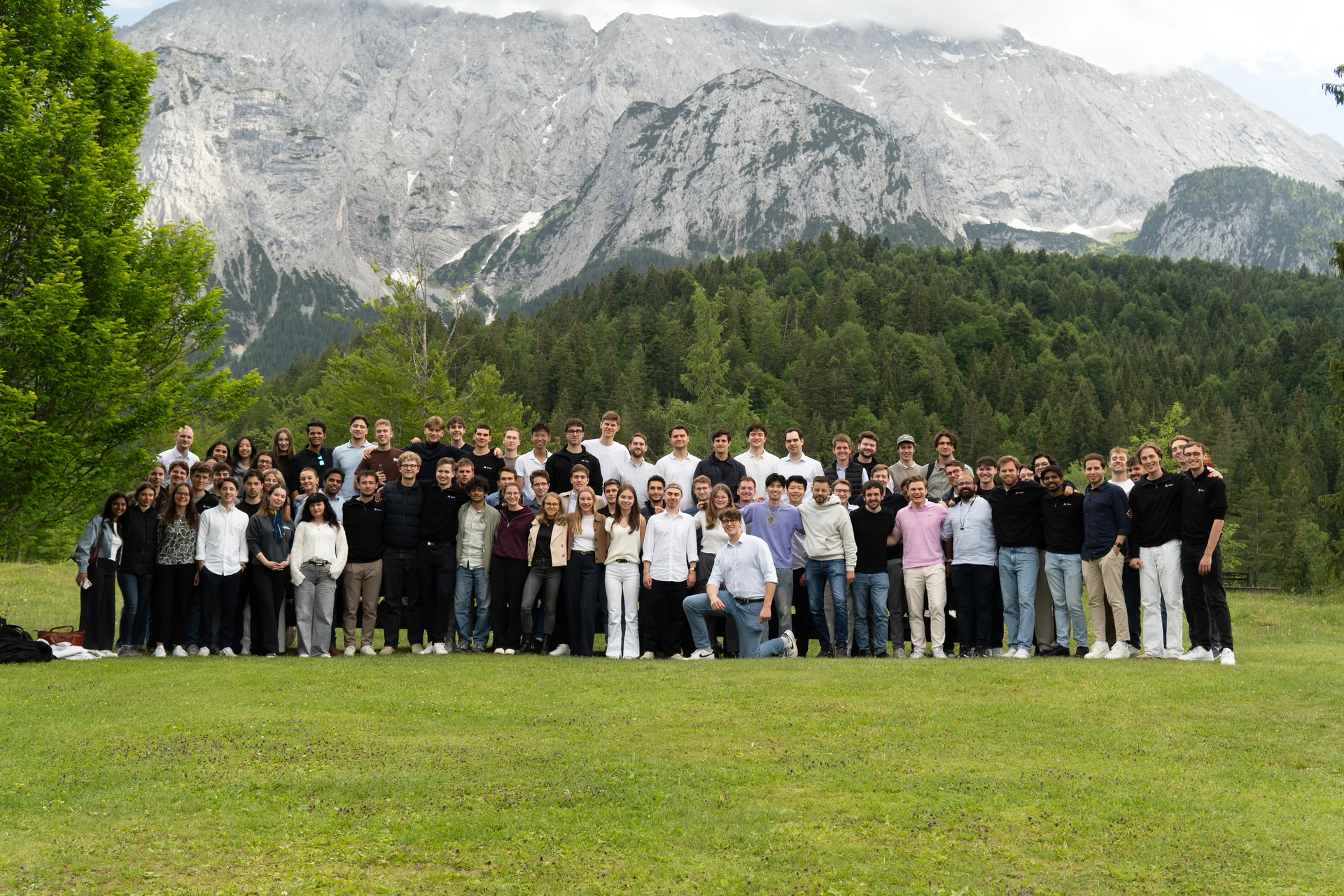
TUM.ai started in the winter of 2020 as a group chat. A handful of students who were curious about AI, no master plan, no budget, just a place to share papers and argue about where the field was going. Six years later, seventy-seven of us were standing in a field in the Bavarian Alps, the Karwendel ridge behind us, posing for a photo that somehow held twelve batches of that same group chat in a single frame.
I help run the software side of TUM.ai today. Which means I spend most of my time downstream of decisions other people made years before I arrived: the conventions, the projects, the culture that just is how we do things. The retreat was the first time I got to meet a lot of those people in person. The ones who built the thing I now help carry.
The tagline for the weekend was where the community comes home. That sounds like marketing until you are actually there, watching someone from the 2021 batch greet someone from this year's intake like family. Two days, two places, and a surprising amount of homecoming. Here is what it was actually like.
From a Group Chat to Twelve Batches
It is easy to forget how young TUM.ai is. The whole thing grew out of an informal group chat in 2020, the kind that usually dies in a month. This one did not. It turned into talks, then meetups, then a Makeathon with OpenAI, then a proper student initiative that runs research projects, builds products, and ships events. None of that came from a strategy deck. It came from members who kept showing up and doing the next thing.
Twelve batches now. Each one a cohort of people who joined, built something, and handed the place to whoever came next. Standing at the retreat, you could almost read the timeline off the room: the early members who are now founders and PhDs, the middle batches deep in industry, and the current students still figuring out what they want TUM.ai to be. Same community, six years of layers.
There is a strange feeling that comes with running something you did not start. You inherit a culture you had no hand in writing, and most of the time you just operate inside it: keep the projects moving, keep the events happening, keep the lights on. You rarely get to ask the people who set it all in motion what they were actually thinking.
The retreat was built to close exactly that gap. The whole premise was to put every generation of TUM.ai in the same place for a weekend and let them mix. Not as a conference with a stage and an audience, but as a reunion where the alumni were the program. That decision shaped everything about how the two days felt.
Saturday in Mittenwald
We took a bus out of Munich early on Saturday and wound our way down into the mountains to a youth hostel in Mittenwald, a small alpine town near the Austrian border. The setting did half the work on its own. It is hard to stay in work mode when the view out of every window is the Karwendel.
The clearest signal of the whole weekend's design was how little it tried to manage us. No packed agenda, no forced fun, no team-building exercises that make grown adults wince. Just enough structure to get people talking, and then a lot of deliberate room to actually talk. For a reunion, that restraint turned out to be the entire point.
It opened with a round of TUM.ai speed-dates, which sounds cheesier than it was. There was an app running the whole thing: you filled in a few interests at the start, it matched you with people from other batches to go find and talk to, and you scanned their QR code once you did. Within half an hour the room had stopped being a collection of separate generations and started being one crowd.
A Walk to Lautersee
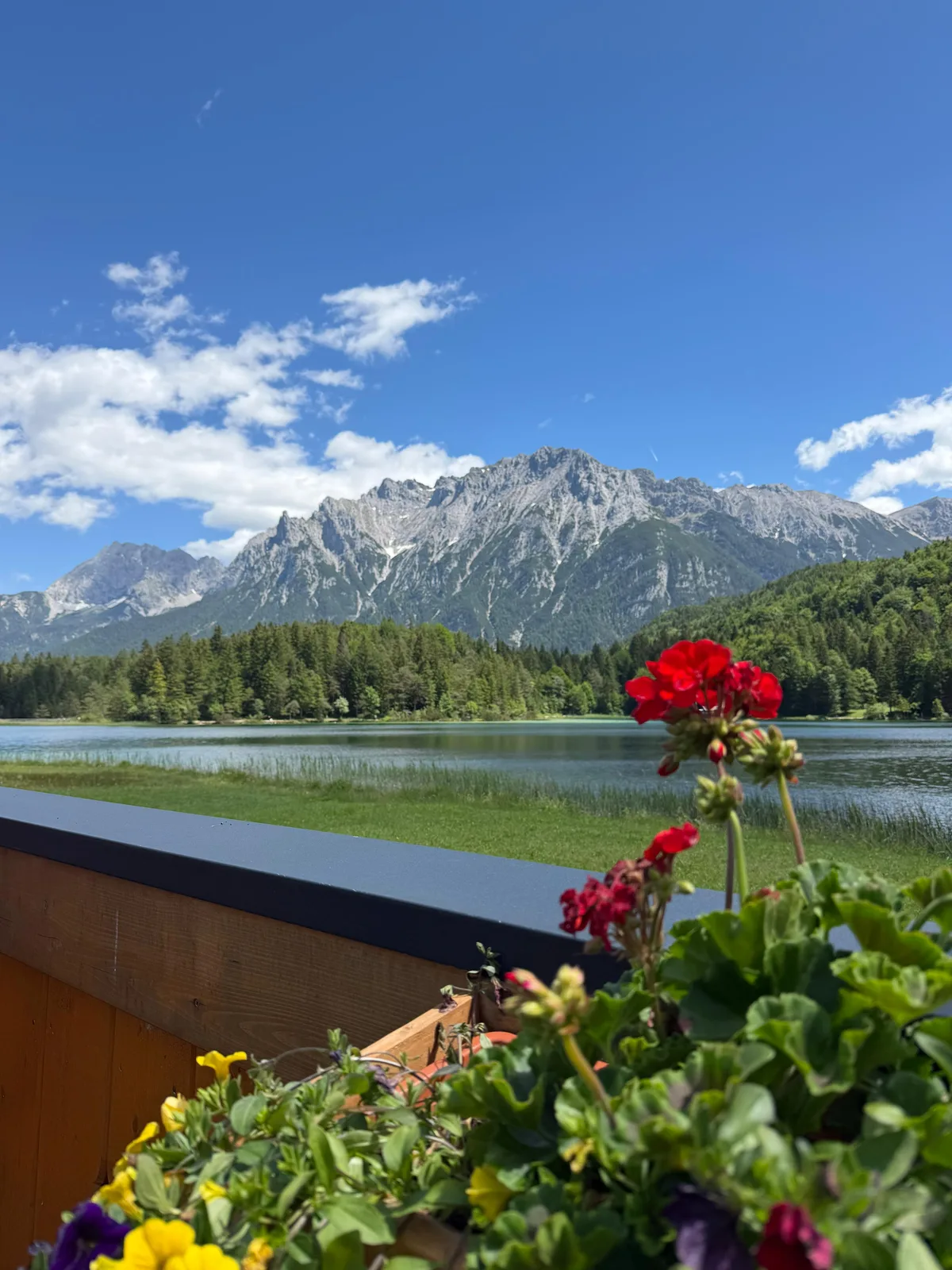
Once the ice was broken indoors, the whole group set off on foot to Lautersee, a lake a short hike above the town. No app this time, no matching: you just fell into step with whoever you liked, talked until the path forced a reshuffle, and ended up beside someone else entirely. By the time we reached the water nobody needed any prompting at all.
There were loose discussion threads floating around for anyone who wanted them, the kind of topics this crowd actually argues about for fun: AI safety, agentic systems, what it takes to start a company. But nothing was enforced. If two people wanted to spend the walk catching up on the last three years of their lives instead, that was just as valid. None of it was mandatory; the prompts were there if you wanted them and easy to ignore if you did not.
That restraint is harder to pull off than it looks. The easy instinct is to fill every minute, because empty space feels like a mistake. This weekend kept betting the other way, that the best thing it could do was get good people moving in the same direction and then get out of the way. The walk to the lake was the first time that bet really paid off.
Lunch by the Lake
Lunch happened at a guesthouse right on the lake, a proper Bavarian spread, the kind of long table meal where you end up deep in conversation with whoever sat down across from you. After the long walk and all the talking, sitting down to actual food with the mountains reflected in the water did not hurt the mood at all.
The seating did the work: nobody sat with the batch they came with, so you ended up across from people you had never met, trading stories about what each batch had built and where everyone had landed since. Six years of TUM.ai history got passed around the table sideways, batch to batch, just in conversation.
Stories From the People Who Went First
The afternoon's one piece of real program was a couple of rounds of alumni stories, and they were deliberately unpolished. No slides, no pitch decks, no thirty-minute keynote. Just people who had gone on to found companies, to do research, or into industry, sitting down and talking honestly about how it had actually gone for them.
That honesty is the part you cannot fake with an external speaker. When the person telling you about the unglamorous middle of building a startup is someone who was in the same student initiative as you a few years earlier, the advice lands differently. It is not aspiration from a distance. It is a slightly-older version of you saying here is what nobody warned me about.
Then we walked back down to the hostel for dinner, the conversation just carrying on the whole way.
The Part With No Agenda
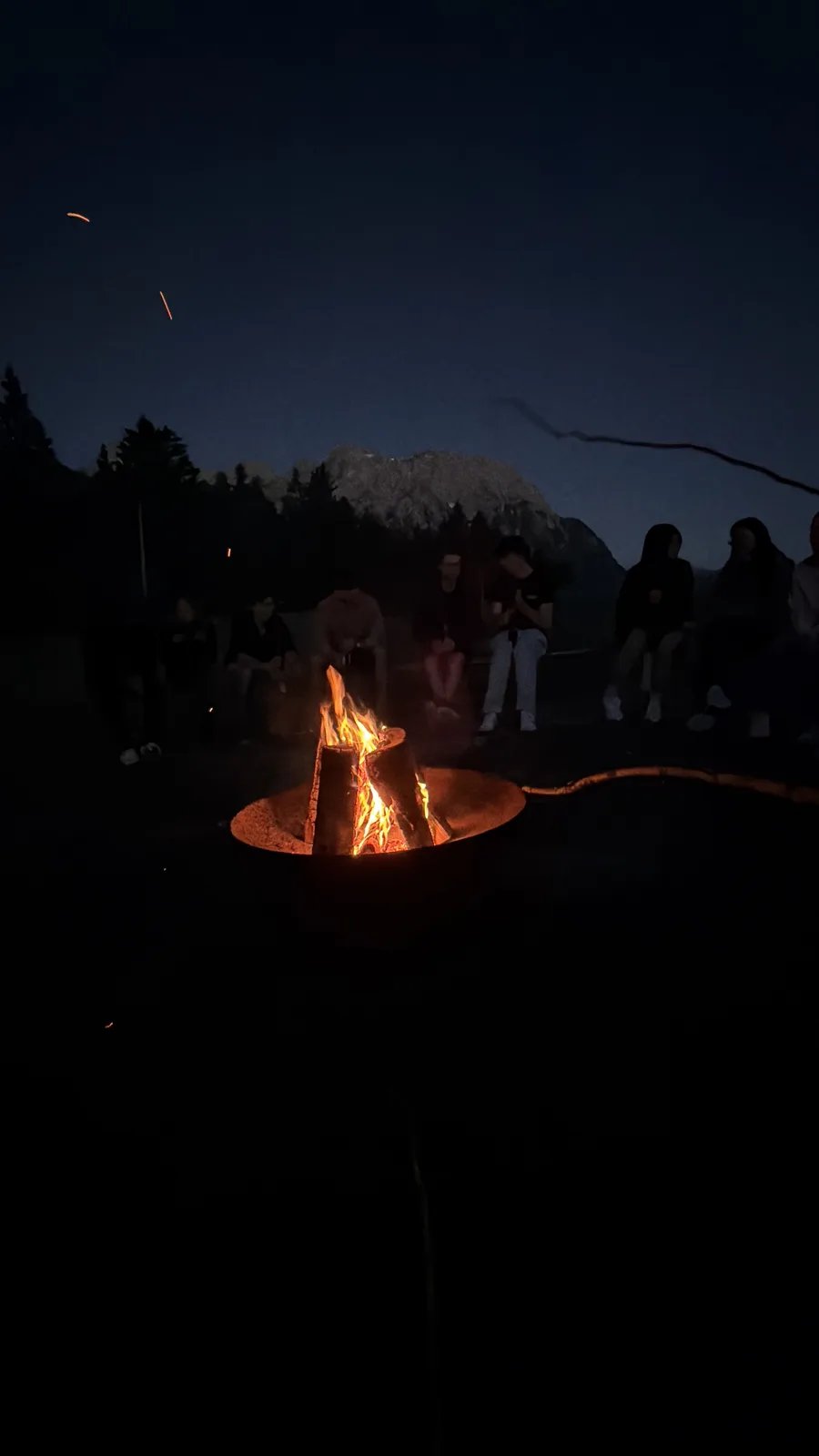
After dinner there was no hard program at all, and that turned out to be the best decision on the sheet. The evening was just a set of options laid out in parallel, and you wandered between whichever ones pulled you in.
There was a campfire when the weather allowed it, with stick bread baked over the flames. There was a pickup football game that loosely sorted itself into national sides, Morocco against Brazil and the like, played with a good deal more commitment than the stakes called for. And there were a few people who just pulled out their laptops and kept coding, because some habits do not switch off for a weekend.
Later it turned into board games and the kind of long, winding conversations that only happen once the structured part of a day is finally over. The late slot belonged to the people who did not want it to end, and the dining hall stayed full long after the official program had run out.
If I had to point at where the actual reconnecting happened, it was here, in the hours nobody scheduled. The program got everyone into the same building. The unstructured night did the rest.
Sunday at Schloss Elmau
Sunday changed register completely. We moved from an alpine youth hostel to Schloss Elmau, a castle resort tucked deeper into the mountains, and the day leaned into substance. Same people, very different room.
It opened with a State of TUM.ai session: the current board on stage, honestly laying out what the initiative is working on, where it is stuck, and where it wants to go. Rather than marching every department past the audience one by one, it was framed around the key projects, the actual work people are pouring their evenings into. The software development department had its place in there too, a sign of how central the engineering side has become to what TUM.ai actually ships. Less a polished update than a room of people just being straight with each other about how it is actually going.
Running quietly underneath the whole day were plenty of chances to grab a coffee with someone, a light nudge to keep people meeting new faces between sessions instead of clustering back into the batches they already knew. It is a small thing, but across a weekend it adds up to a lot of conversations that otherwise would not have happened.
Builders Talking to Builders
Then came the content the alumni had quietly been asking for: builders talking to builders. First a founder panel made up of TUM.ai alumni, people who had sat in the same seats as the current members not many years ago and had since gone off to start their own things.
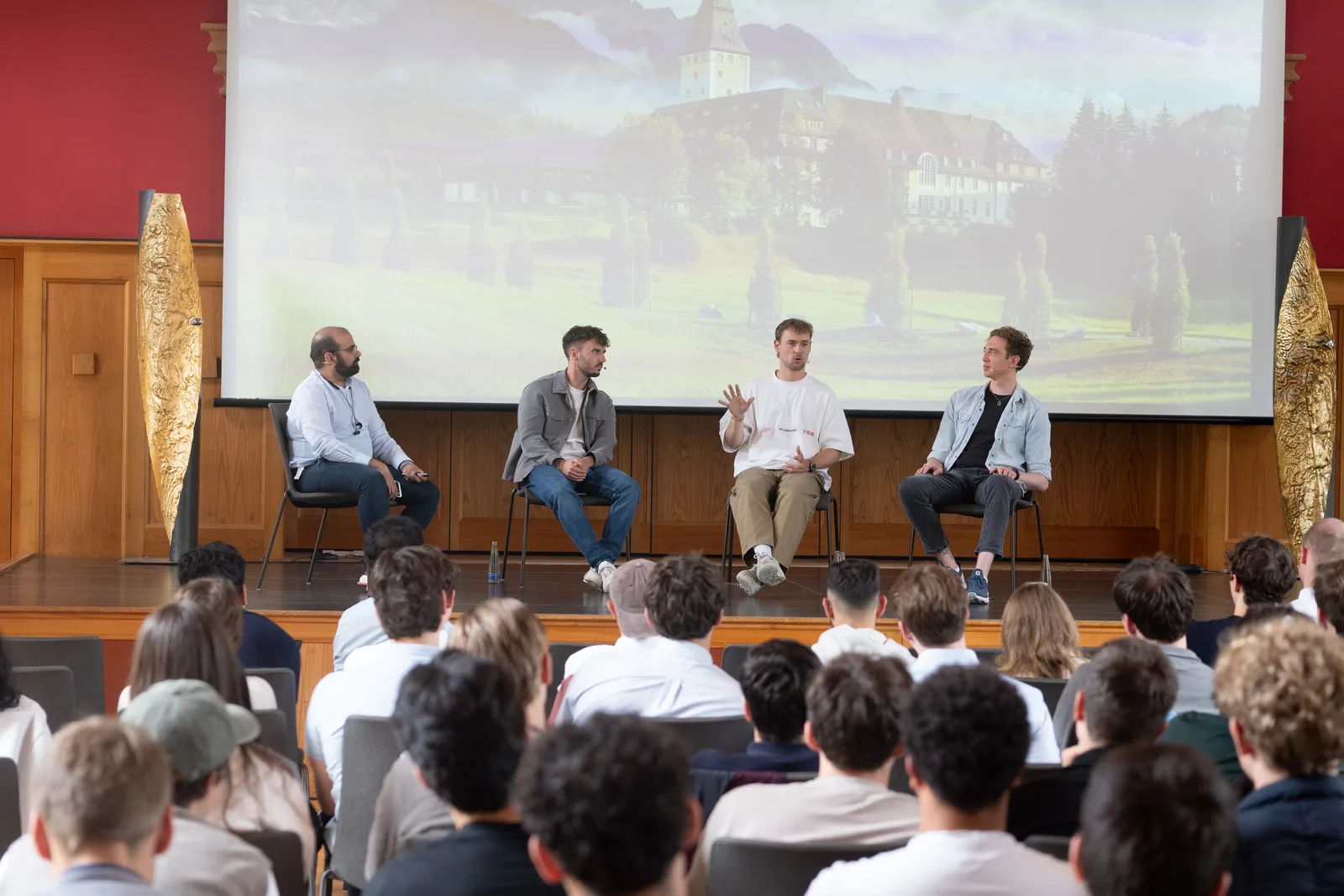
After that, a fireside chat with three people who have gone a long way fast. Adina Goerres, co-founder and CEO of Superglue and a Y Combinator alum. Viet Le-Martin, formerly a partner at General Catalyst. And André Petry, co-founder and CEO of Tacto. Founder, investor, founder, a full loop around how companies actually get built and backed. The conversation itself was genuinely entertaining; everyone who was there knows why.
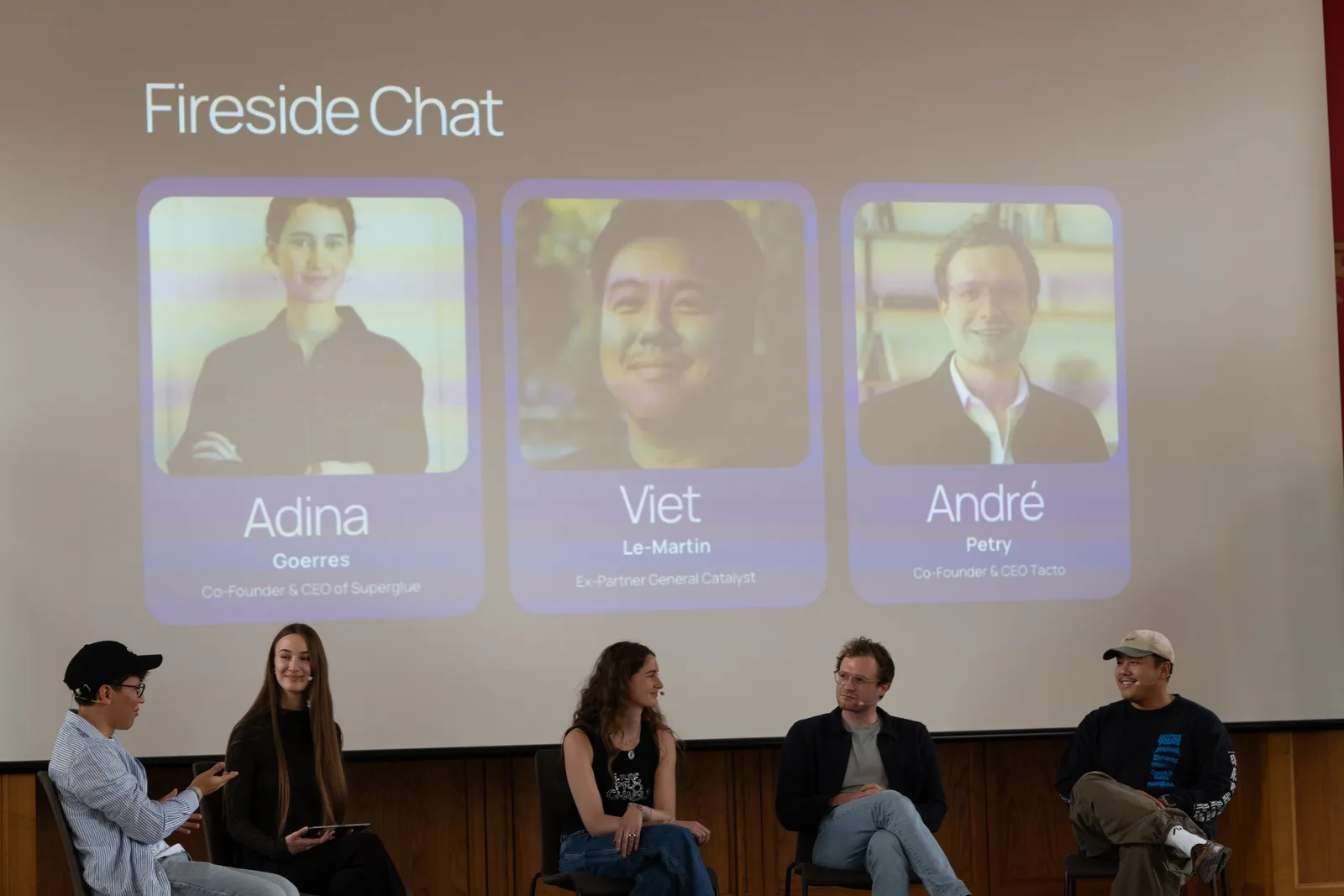
What stuck with me was less the advice and more the throughline. A few batches ago, two of the three were students in the same kind of group chat I described at the top. The distance between sitting in the audience at a TUM.ai event and sitting on the stage at one turns out to be a handful of years and a lot of work.
A Keynote From the Frontier
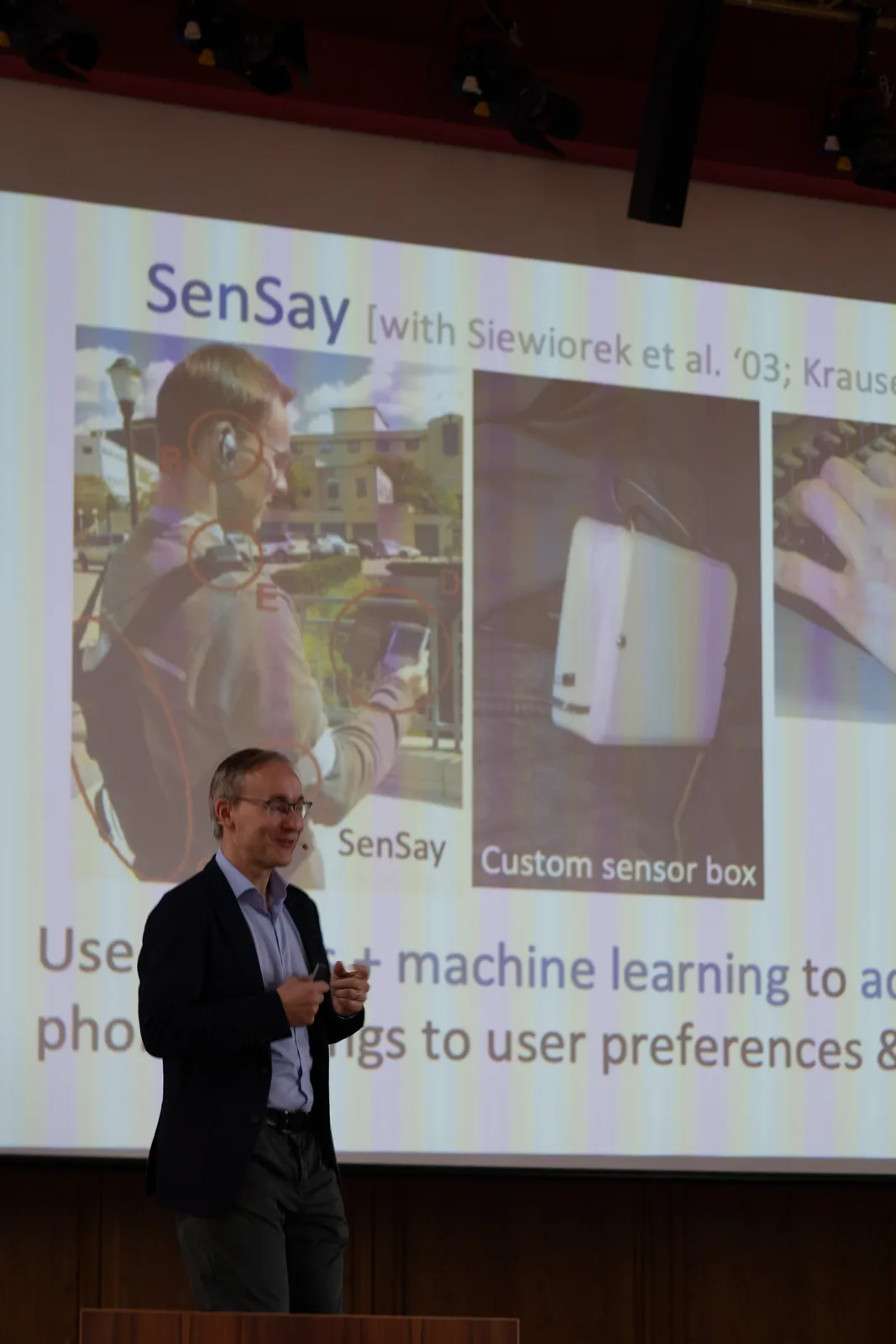
The keynote came from Prof. Andreas Krause, who chairs the ETH AI Center in Zurich. He took the long view, starting from his own early work, the SenSay context-aware wearable from the 2000s that was up on the opening slide, and tracing the field forward from there to where it sits now. The throughline was a vantage point most student events never get near: how development actually differs across Switzerland, the US, and Europe, where the genuine research frontier sits, and how much of the noise around it is just noise.
A lot of it centered on Apertus, the fully open large language model that came out of the Swiss AI Initiative, the joint effort between ETH Zurich, EPFL, and the national supercomputing center. Released in 2025 in 8B and 70B sizes under a permissive license and trained across more than a thousand languages, it is a deliberate bet on AI as a public good rather than a closed product, and Krause sits on the steering committee behind it. Hearing the case for that kind of open, publicly funded model laid out firsthand was the sort of talk that recalibrates how you read the news for the next six months. After a weekend that had mostly been about people and stories, it was a useful jolt of perspective on the field all those people are pouring themselves into, delivered by someone who watches it from the inside.
Posters, Coffee, and a Long Goodbye
The afternoon eased off into a coffee and cake break with a deliberate ask attached: go find the speakers, the ones who had stayed on, and actually talk to them. After two days of the alumni doing most of the talking, it was the chance to close the loop in person before everyone scattered.
The closing session was a feedback round in the honest spirit of the rest of the weekend. Where should TUM.ai be heading? How could the alumni community actually help? The answer the board kept gently pushing was simple: stay reachable. An alumni newsletter, a regular alumni table to keep the network warm, small commitments that turn a great weekend into an ongoing thing instead of a one-off.
And then the group photo out on the meadow, the Karwendel ridge standing behind the same seventy-seven people, now visibly more tired and more connected than two days earlier, before the bus carried us back down to Munich. The ride home was a long, happy wind-down, half the bus asleep and the other half still talking.
What I Took Home
The moment that stuck with me was not on any stage. It was a long conversation with Tobias Zeulner, who helped build TUM.ai in its early years and has since gone off to run his own app business. We ended up deep in app development, his work and mine, the unglamorous realities of shipping a product and keeping it running, with a fair bit of mentoring folded in along the way. None of that was on the agenda. It happened because TUM.ai had put two people who build apps in the same room a few years apart, and that is exactly the kind of thing the network quietly does.
That reframed the whole weekend for me. It is easy to think the output of a student initiative is its projects, its events, the products it ships. The retreat made the obvious-in-hindsight case that the real output is the community itself: the seventy-seven-person, twelve-batch, six-year network that turns up to a field in the Alps because the group chat never really ended. Everything else is downstream of that.
Two days, two places, one family, as the weekend kept insisting. I came in thinking of TUM.ai as something I help operate. I left thinking of it as something I get to hand on, the same way the people I met this weekend handed it to me. That is a better way to hold it.