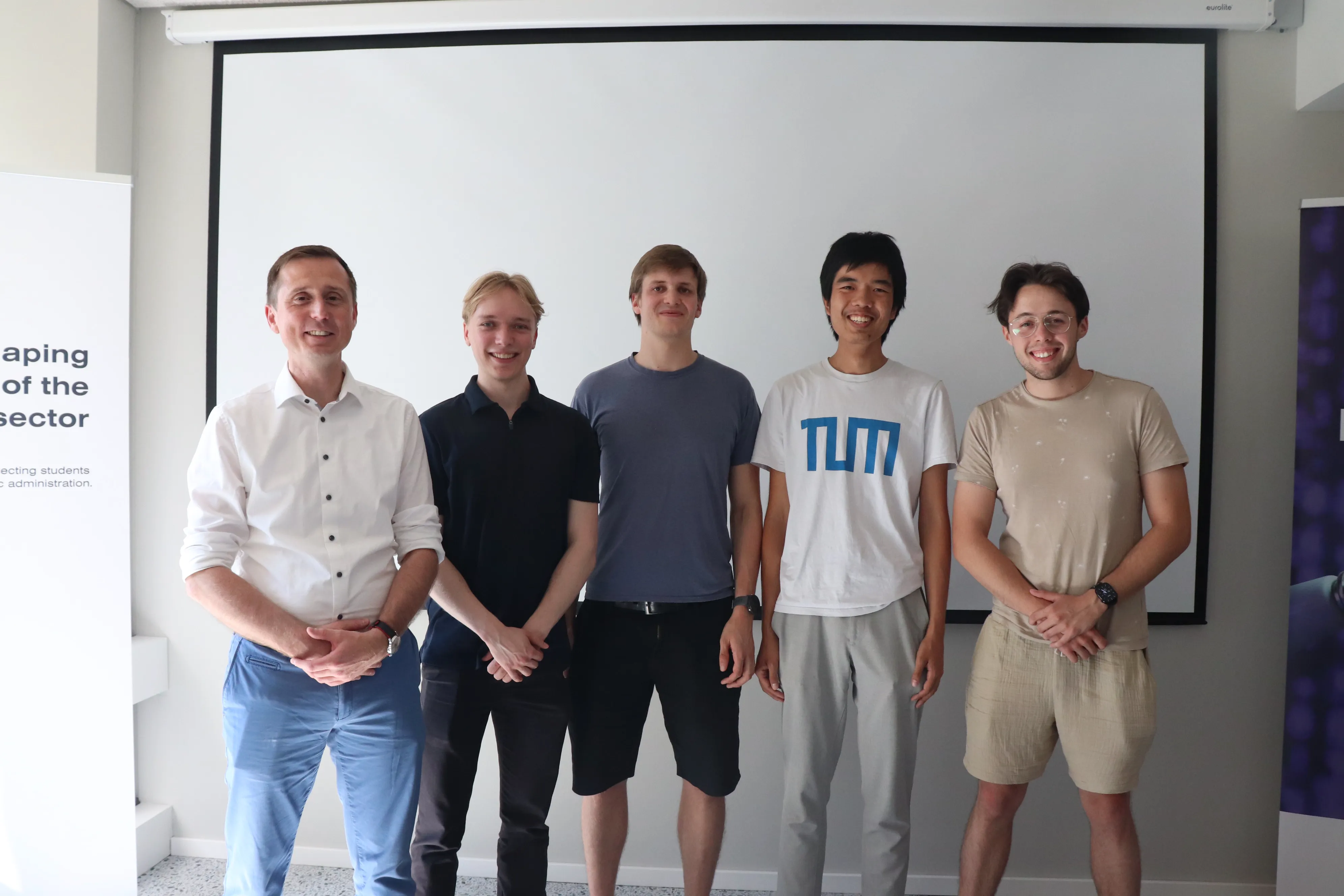
At the TUM.ai x Public Makers Hackathon, our team tackled a critical challenge from the German Federal Foreign Office: how to maintain communication infrastructure during a crisis. We designed and prototyped EuroMesh, a conceptual digital embassy that transforms smartphones into a decentralized, peer-to-peer network. Inspired by AirDrop, our proposed solution uses Bluetooth and Wi-Fi Direct to create a self-healing mesh for private data sharing when traditional networks fail. EuroMesh secured 2nd place by demonstrating a robust, architecturally feasible prototype for crisis communication.
Technical Leadership & Prototyping
Within an 18-hour build window, my role was to design the project's high-level architecture, including the dynamic crisis map, overall project structure, and deployment strategy. I coordinated the development efforts of our interdisciplinary team, ensuring that the individual components, such as the local-first AI assistant prototype, integrated seamlessly into the final prototype.
Technologies Used for Prototype: TypeScript, React, Bluetooth LE (conceptual), Wi-Fi Direct (conceptual), Gemini Flash, and a QR-based cryptographic signing concept.
Potential Real-World Impact
The EuroMesh concept addresses genuine infrastructure vulnerabilities in crisis scenarios where traditional communication networks fail. The proposed system would enable decentralized information sharing using consumer hardware, creating resilient communication channels for both citizens and diplomatic personnel. This project demonstrates how emerging technologies can solve critical humanitarian challenges while working within real-world deployment constraints. Access to the app would be restricted to German or EU citizens, requiring pre-identification and setup using a passport to ensure secure and controlled usage.
Core Technical Innovations
Decentralized Mesh Architecture
Prototyped a resilient mesh network concept using Bluetooth Low Energy and Wi-Fi Direct to maintain communication when cellular infrastructure fails.
Local-First AI Assistant
Prototyped a local-first AI assistant using Gemini 2.5 Flash for multilingual crisis support, a fully local LLM is planned for production to ensure maximum privacy and offline capability.
Offline Identity System
Demonstrated a digital passport verification prototype using QR codes for secure offline identity confirmation, envisioned for coordination with allied countries' borders to facilitate safe passage during crises.
Want to see more?
Dive deeper into the projects and write-ups behind this work.